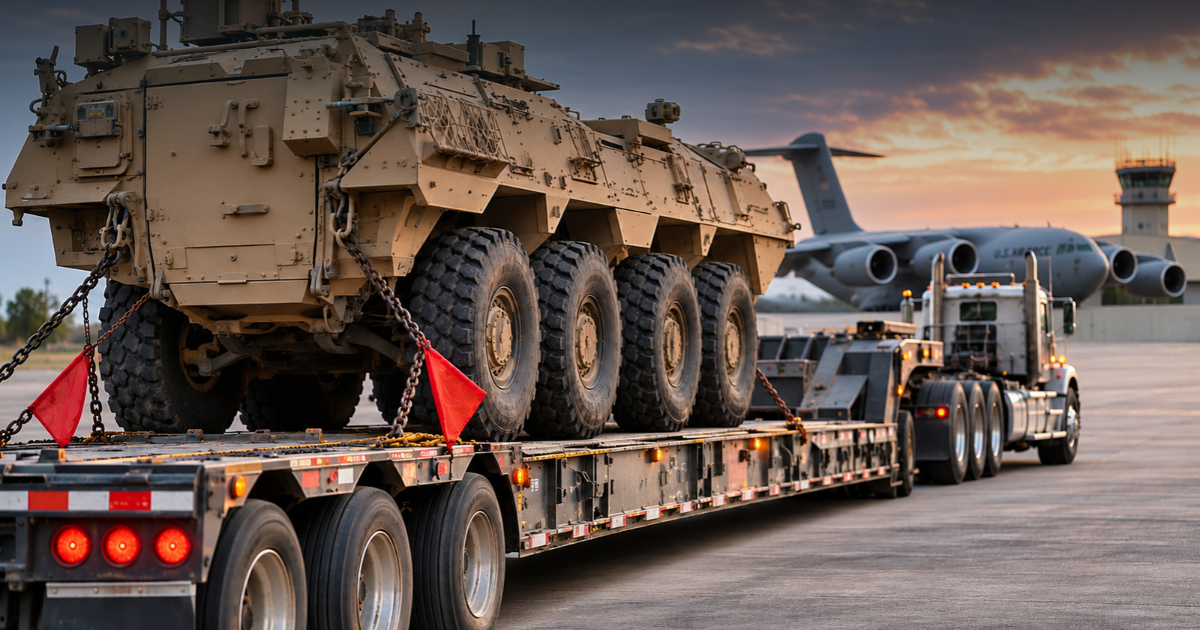
Military equipment transportation involves tight delivery schedules, specialized freight requirements, and multiple layers of coordination. For defense contractors managing heavy equipment movements, the challenge is often keeping transportation aligned with equipment readiness, carrier availability, and installation or operational timelines.
A change in one area can affect the entire delivery schedule. Addressing these dependencies early is critical to minimizing disruptions.
Where Military Equipment Transportation Gets Complicated
Heavy haul military transport requires coordination well before equipment is dispatched. Even experienced logistics teams encounter challenges when shipment specifications, permitting requirements, and delivery schedules are managed independently.
Three areas frequently create complications:
Late Changes to Equipment Specifications: Changes in cargo dimensions, weight, or configuration can affect trailer selection, route feasibility, and permit requirements. When these details change after transportation has been arranged, the resulting adjustments can delay shipment.
Permitting and Route Constraints: Oversized equipment movements must account for bridge restrictions, clearance limitations, jurisdictional requirements, and approved travel windows. A route that works for one shipment may not accommodate another, even when the origin and destination remain the same.
Receiving-Site Readiness: Restricted facility access, limited unloading resources, and changing project schedules can create bottlenecks at delivery. Equipment arriving before a site is prepared to receive it may require additional staging or rescheduling.
These challenges become more difficult to manage when multiple suppliers, carriers, and delivery locations are involved.
How Can Defense Contractors Reduce Heavy Haul Transportation Delays?
Reducing delays in military equipment transportation requires coordination between procurement, transportation providers, and receiving facilities.
Transportation planning should begin while equipment specifications and delivery schedules are being finalized, particularly for oversized or specialized freight.
Several practices help maintain schedule reliability:
- Confirm transport configurations early. Validate cargo specifications, loading requirements, and carrier equipment availability before establishing delivery commitments.
- Coordinate permitting with shipment schedules. Account for route restrictions, permit lead times, and escort requirements when determining transportation windows.
- Align deliveries with site readiness. Confirm receiving capacity, unloading equipment, and facility access before dispatch.
- Maintain contingency options. Identify potential alternatives when route restrictions, equipment availability, or project changes affect the original transportation plan.
For projects involving multiple shipments, centralized coordination helps teams identify scheduling conflicts before they affect downstream activities.
Why Shipment Visibility Alone Is Not Enough
Tracking provides information about a shipment's location, but location data alone does not resolve transportation disruptions.
For defense contractors managing complex equipment movements, shipment visibility is most useful when paired with active logistics coordination.
That includes monitoring delivery milestones, communicating schedule changes, coordinating with receiving facilities, and adjusting transportation plans when exceptions occur.
The operational value comes from using shipment information to make decisions before delays affect other project activities.
This is particularly important when equipment deliveries must align with installation schedules, limited receiving windows, or the availability of specialized unloading resources.
Coordinating Military Logistics Across Multiple Vendors
Defense projects frequently involve equipment moving between manufacturers, staging locations, and military installations. When transportation is arranged independently across suppliers, contractors can lose visibility into scheduling dependencies.
Managed logistics provides centralized oversight of transportation planning, vendor communication, warehousing, staging, and delivery sequencing.
For military equipment transportation, this coordination can help contractors manage overlapping shipments, respond to schedule changes, and maintain alignment between equipment availability and site requirements.
The objective is straightforward: reduce avoidable disruptions by managing transportation as part of the broader project schedule.
Supporting Military Equipment Transportation With Trangistics
Trangistics has experience supporting military freight transportation and specializes in coordinating complex heavy haul and specialized equipment movements.
Its capabilities include heavy haul transportation, multimodal freight coordination, expedited shipping, warehousing, staging, and managed logistics.
For defense contractors managing oversized equipment, multiple shipment origins, or restricted delivery schedules, Trangistics provides transportation planning and logistics coordination tailored to project requirements.
Managing an upcoming military equipment shipment? Contact Trangistics to discuss your freight requirements, delivery constraints, and transportation schedule.
Frequently Asked Questions
- What key permits are required for transporting heavy military equipment?
Oversized and overweight military freight typically requires state-by-state oversize/overweight permits, route clearance approvals, and potentially civilian police or pilot escort vehicles depending on dimensional thresholds and local jurisdiction regulations.
- How early should transportation planning begin for defense freight?
Logistics coordination should start as early as possible during the equipment procurement or manufacturing phase. Securing specialized carrier equipment, surveying transport routes, and obtaining necessary permits often require several weeks of lead time.
- How can defense contractors prevent delivery bottlenecks at military installations?
Contractors should pre-clear driver credentials for base access, confirm receiving facility hours and crane/unloading capacity in advance, and maintain active communication between carriers and site logistics officers prior to dispatch.